Vectors and Scalars 

This was written a while ago so sorry for any errors.

If a particle is moving in a straight line, it can only go in two ways. One way to look at its action is as good, and the other way as negative. However, a plus or minus sign is no longer enough to show the direction of a particle moving in three dimensions. We need to use a vector instead. This chapter talks about the (vector) rules of combination that work for vectors, which have both direction and size. A vector variable is any number that can be shown as a vector because it has both a size and a direction. These are some examples of vector numbers in the real world: acceleration, motion, and displacement. It will help you a lot in later parts to understand how vector combinations work, because you will be seeing a lot more of them. Not every real amount has a direction that goes with it. As an example, the ideas of time, energy, mass, temperature, and pressure do not “point” in the usual sense. We use normal algebraic rules to deal with these numbers, which are called scalars. Scalars are made up of a single number and a sign, like 40°F. Moving from one place to another is the most basic type of vector number. If a vector shows a displacement, it makes sense to call it a displacement vector. (Acceleration and motion vectors work the same way.) Something goes from A to B and is said to have undergone a transfer from A to B. An arrow from A to B shows this change in position. The line shows what the vector looks like. There are three lines that go from A to B. They are all the same size and point in the same direction. In this way, they show the same change in where the particles are and describe the same vectors of movement. You can move the vector without changing its value as long as its length and direction don’t change. What the shift vector doesn’t tell us is anything about the particle’s real path. Displacement vectors don’t really show motion; they just show how the motion affects everything.

Shrubs

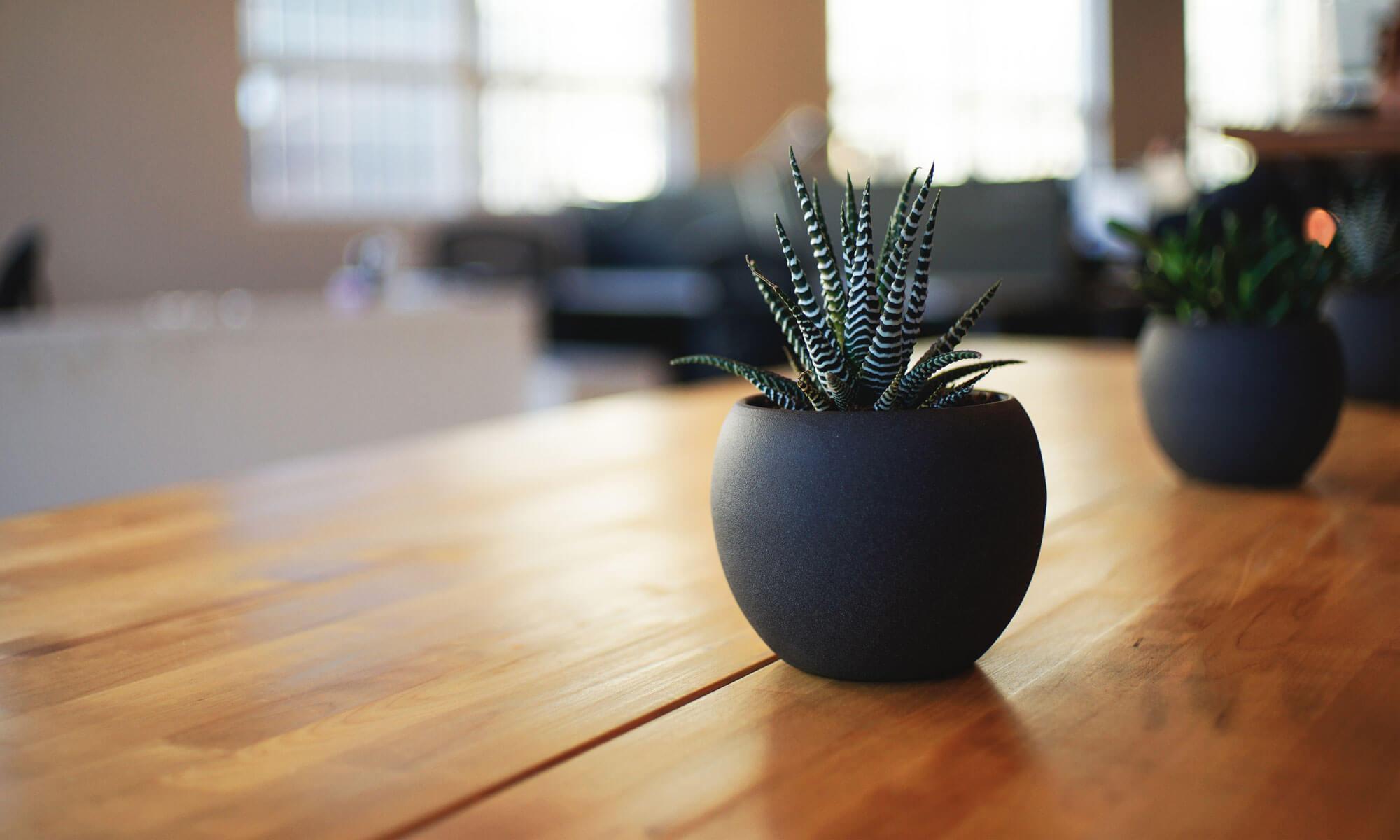
A shrub, which is also sometimes called a bush, is a large, woody plant that grows back every year. Herbaceous plants don’t have hard roots that grow above ground, but shrubs do. Shrubs can either lose their leaves in the fall or keep them all winter. Most shrubs are less than 6–10 m (20–33 ft) tall and have many roots, which makes them different from trees.They are small bushes that don’t get taller than 6.6 ft (2 m). Some plant taxa have species that grow like shrubs, while others grow like trees or grass plants.A plant that is less than 6 m (20 ft) tall is usually called a bush. A plant that is bigger than 6 m is usually called a tree. Some people put things into groups based on how long they are in meters (33 feet). Due to bad growing conditions, many trees don’t reach their full adult height and instead look like shrub-sized plants. In the right conditions, some members of these species can reach greater heights. In terms of how long they last, shrubs are in the middle of plants and trees. Under perfect conditions, some things only last five years. Some animals can live for more than 70 years. These animals are usually bigger and have more wood. On average, they live for eight years. A shrubland is a natural place that is mostly made up of different kinds of shrubs. You can find this kind of land all over the world. It includes fynbos, maquis, shrub-steppe, shrub swamp, and grassland. A shrubbery, also called a shrub border or shrub garden, is a marked place in parks and gardens where trees are grown. It doesn’t happen as often as it did 100 years ago. Certain yard plants, like rhododendrons, have been cultivated to bloom more often. In other cases, breeding has also been done to change the leaf’s color or shape. When it comes to farming and business, shrubs are not as useful as trees and grass plants. Few plants are eaten directly, but some species produce berries that can be eaten, here in the cooking sense, not the biological sense. In addition, these plants are usually too small to be used for wood, unlike trees. Some of the species that are used have pleasant scents, like lavender and rose, while others are used because they are useful for medicine. A lot of the time, tea and coffee plants grow where trees and bushes meet. Sometimes they are picked from shrubs, but if they are left to grow, they can get as big as little trees.

My Current Language Goals

I am currently studying Finnish after getting interested in the language by playing the game My Summer Car. After studying it for some time, it isn’t too difficult. The grammar is pretty regular, and the prepositions (like on, at, and to) are just stuck on the ends of nouns, which, while confusing at first, isn’t too difficult to pick up after some practice. And while the language isn’t part of the bigger neighboring language families (Slavic and Germanic), it has been in contact with them for enough time to give a lot of loan words that help keep you balanced in the language.

The other language I have been studying has been Icelandic. While it’s a Germanic language, it is far removed from the modernized Germanic languages, like English and German, and it is quite challenging to learn. I have been studying Icelandic on and off for years. Fortunately, I have been able to start using some decent free resources such as https://icelandiconline.com/, which is open to use by the public. The problem with the website is that almost everything is in Icelandic, so you need some knowledge of the language to use the website. The website was also created in 2010, I believe, and its age does show. If you are interested in Icelandic using the website, then you will have to take a lot of time, in the beginning, using google translate in order to get by.

While learning both these languages, I got inspired to create some learning resources for both of them. I tried my best to find existing resources to no avail. In order to help myself learn these languages and to help all of you who want to learn these languages, I decided to create these resources, which you should be able to see on this website in the near future.

Making Mistakes

Making mistakes is a part of life and everyone makes mistakes.  We as humans are bound to make mistakes, to err is human is the phrase that gets tossed around frequently and will always hold true.  So should we as humans be punished for making mistakes or taking risks? Continue reading “Making Mistakes”

El Agua y Nuestro Mundo (Water and Our World)

Today we have another post by Science Woman.  Today she is talking about water and our world, something that many take for granted but needs to be safeguarded if we are to survive on this planet.

La imagen del planeta tierra, la vista desde el espacio es hermosa y no creo ser la única en tener esa opinión, los colores que se muestran resaltan las bondades de “Nuestro planeta” y  lo que  mas llama la atención a simple vista es el color azul que representa el agua en la Tierra, cualquiera podría pensar que tenemos abundante agua para el consumo humano, pero se equivocan. Continue reading “El Agua y Nuestro Mundo (Water and Our World)”